
Paintwork
Plastic welding and paint on bumpers
Repair of cracked, dented or broken plastic bumpers with plastic welding, fibreglass reinforcement and full paint — 1–3 days, fixed price.
What damage happens to plastic bumpers?
Modern bumpers are made of thermoplastic (typically PP/EPDM or ABS), flexible and light but also vulnerable. Typical damage includes cracks from parking knocks against kerbs, dents from minor collisions, breakage at the rear mounting points (causing the bumper to hang loose), and deep scratches that have gone all the way through paint into the plastic itself. Many owners believe a cracked or broken bumper must be replaced — but in most cases we can repair it for a fraction of the cost of a new part.
Plastic welding — how it works
Plastic welding uses a temperature-controlled hot-air gun and a welding rod of the same plastic type as the bumper. Cracks are first cleaned and opened with a V-groove so the welding material gains good purchase. We then melt the welding rod into the crack so the two parts fuse into one — equally strong as original material when done correctly. For large cracks or high-stress areas we add fibreglass reinforcement on the rear face so the repair handles vibration and temperature swings. That combination is why a plastic-welded bumper is often stronger than before the damage.
After welding — sanding, primer, paint
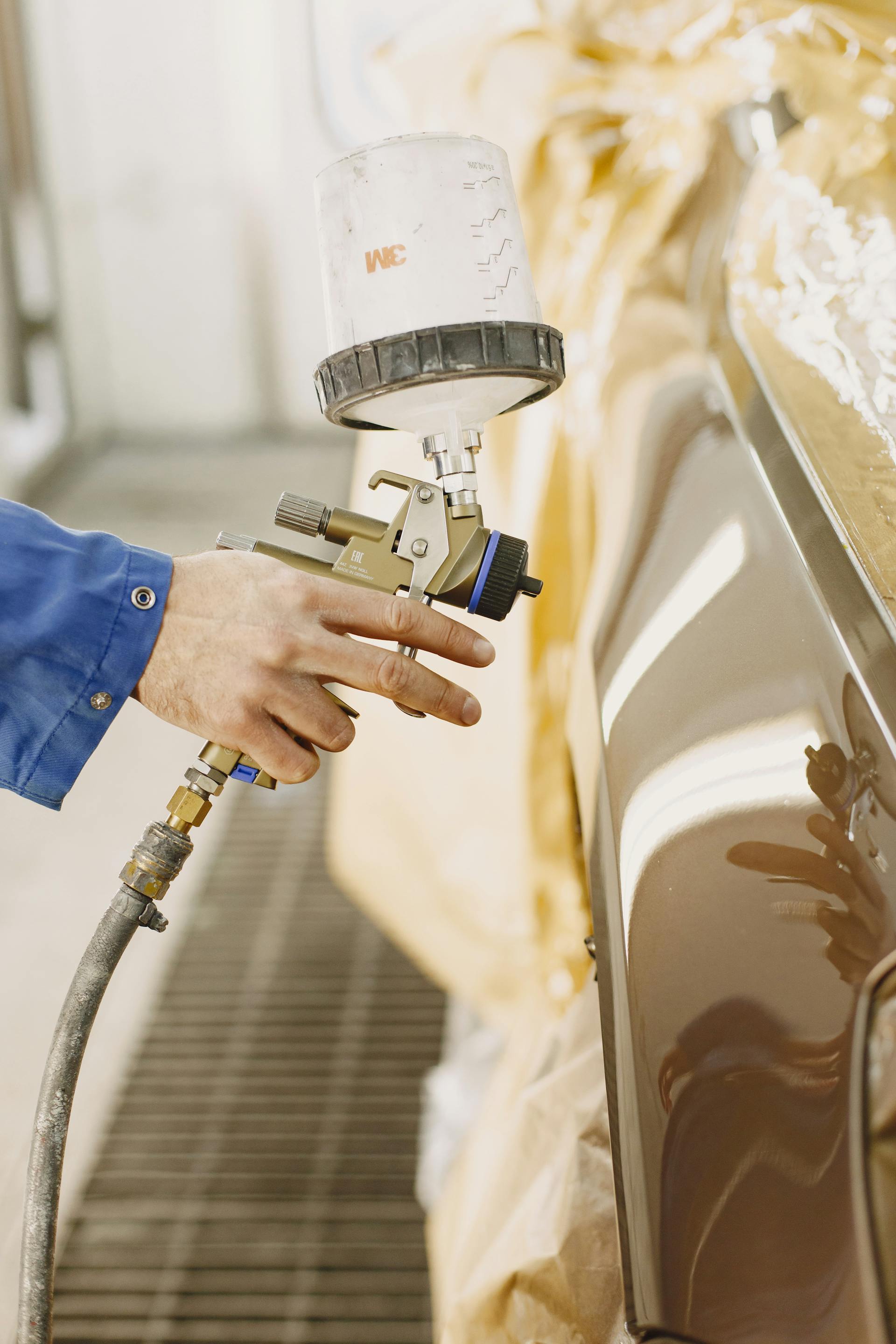
Once the plastic weld is complete and cool, the surface is sanded smooth. Any remaining unevenness is filled with plastic filler (regular metal filler does not work on plastic). The area is then thoroughly cleaned and a special plastic primer is applied — plastic has low surface energy and needs a primer designed to bond to thermoplastic. After primer cure, base coat and clear coat are built up normally. We match colour with a spectrophotometer so the transition to the rest of the car is invisible.
Time estimate and price
A typical bumper repair with plastic welding and full paint takes 1–3 working days. Time depends on damage extent, whether the bumper is removed for work (we usually recommend it for best access and result) and colour system. Price is typically 4,500–9,000 NOK for a full repair, compared to 12,000–25,000 NOK for a new original bumper plus fitting. We always provide a fixed quote after inspection.
When does the bumper still need replacing?
In some cases we recommend replacement rather than repair. Examples are bumpers with many parallel large cracks, extensive deformation where the plastic has stretched or warped, fractures in crash-absorbing foam or infrastructure behind the bumper, or damage covering a large area with integrated sensors (parking sensors, front camera) where the repair would affect functionality. We always make an honest assessment — if repair is not justifiable, we say so.
Book paintwork online or call us on 41 17 32 24.
Frequently asked questions
Can plastic bumpers really be welded?
When should I replace the bumper instead of repairing?
Does the bumper retain its strength after repair?
Does the repair affect crash absorption?
Ready for service or repair?
We help you quickly and professionally with all your vehicle needs.